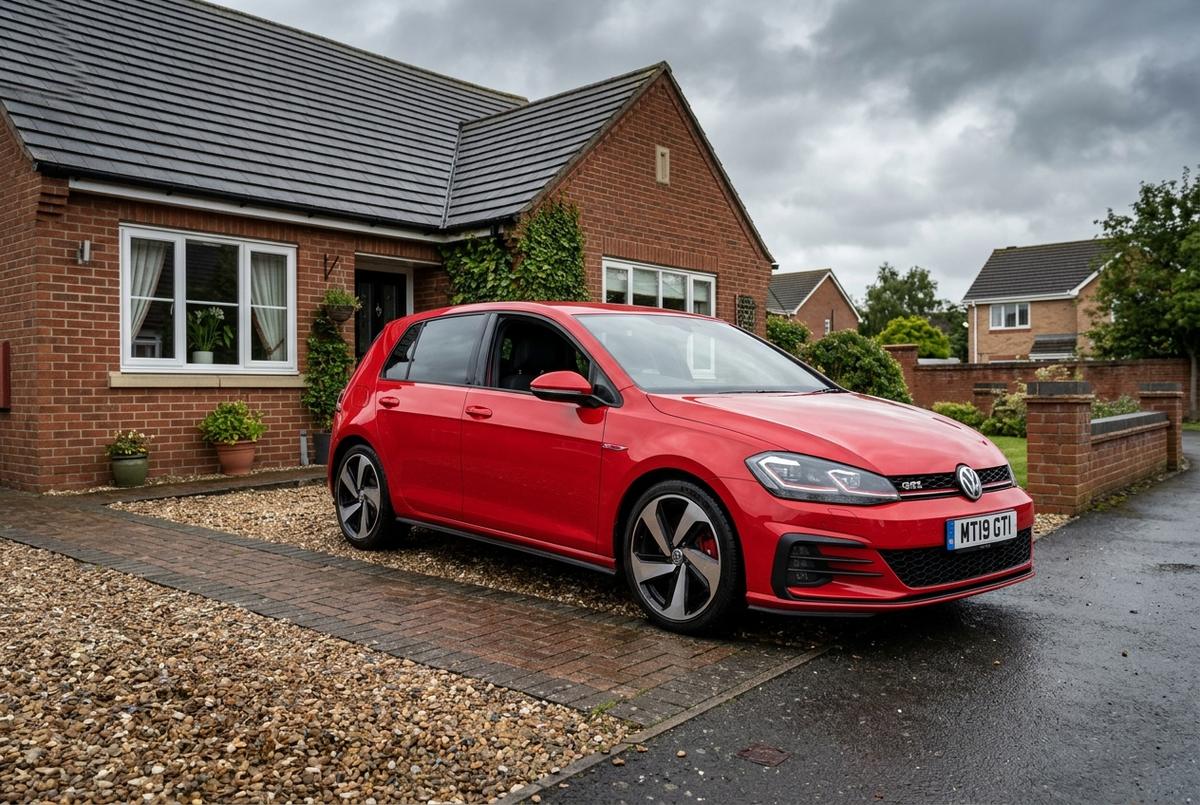
The Mk7 and Mk7.5 Golf GTI is one of the most popular cars we tune in Nottingham and Derby, and almost every owner asks the same question: Stage 1 or Stage 2? The honest answer depends entirely on whether you're prepared to fit some hardware. Here's a straight guide to the EA888 engine, what each stage really delivers, and how to choose.
The EA888: a tuner's favourite
The 2.0 TSI EA888 Gen3 in the GTI is one of the most tuneable, best-understood engines on the road. Volkswagen ships it at 227–245 bhp depending on model and year, but the turbo, injectors and internals have serious headroom. That's why the GTI responds so dramatically to a proper calibration — and why it's so important the map is written to your exact engine and hardware rather than flashed from a generic file.
Stage 1: the sweet spot for most owners
Stage 1 is software-only on completely standard hardware. On a GTI we typically take 230 bhp to around 290–300 bhp and lift torque from 350 Nm to roughly 420–440 Nm. The car gains sharper throttle response, a much stronger mid-range and a genuinely quick feel — all while staying reliable on the standard turbo, clutch and cooling. For the vast majority of GTI owners who want a fast, usable road car with no extra outlay, Stage 1 is exactly the right answer, and it's the cheapest, lowest-risk route to a transformed car.
Stage 2: only once the hardware is there
Stage 2 is written to exploit hardware you've fitted — most importantly a high-flow or sports-cat downpipe, and ideally an uprated intercooler and induction kit. With those in place we can run more boost for longer and typically see 310–340 bhp. The key point: Stage 2 software on standard hardware gives you almost nothing extra over Stage 1, and can heat-soak the standard intercooler. Fit the parts first, then the map — in that order — or you've spent money for no measurable gain. If you start at Stage 1 and upgrade later, we credit the Stage 1 price against Stage 2.
Don't forget the DSG gearbox
Most GTIs run the DQ381 DSG. At Stage 1 a TCU calibration is optional but lovely — faster shifts, launch control, sharper kickdown. At Stage 2 torque it's strongly recommended, because you're usually at or past the factory DSG torque limit and the box will otherwise clamp the engine map. We tune the DSG in the same mobile visit and match it to the engine file so the whole drivetrain behaves as one.
Reliability, fuel and honesty
A well-written GTI map keeps timing, fuelling and boost within safe limits, and we health-check every car before we touch it. Run the fuel the map was written for — 99 RON gets the best from a turbo petrol — and keep up with servicing, especially if you drive it hard. We won't write a Stage 2 file onto worn or mismatched hardware just because you've asked; if the car isn't ready we'll tell you exactly what it needs first. That honesty is why our tuned GTIs stay reliable.
Whether it's a GTI, a Golf R, a GTD or a 2.0 TDI daily, we tune the whole VW range — plus the SEAT and Škoda cars that share the platform — fully mobile across Nottingham, Derby and the East Midlands. Send your registration and we'll confirm the realistic Stage 1 and Stage 2 figures for your exact car and a fixed price.